







Carolyn J. Braden • 4 Minute Read

How to Strip Your Laundry for the Deepest Clean Ever: The Viral Hack That Restores Everything
Ready to bring your dingy towels, sheets, and workout clothes back to life? This viral laundry-stripping method is the ultimate deep-clean hack your home routine has been missing. I’m walking you step-by-step through the exact recipe, the soak time, and the pro-tips that make your fabrics look, feel, and smell brand new again. If you love satisfying before-and-afters, this is your moment.
Bookmark or Pin this one for laundry day magic.
Shop the Post
Don’t feel like reading this article? That’s okay! See my process via my Amazon Shop plus get buying links at affordable prices!

I let my dog be curious as usualy, then I had him leave as I didn’t want him to get into the detergents
The Inspiration
I learned about laundry stripping at my salon. My salon team and my conversations usually are all over the place, and we always all seem to learn something during our time together.
One of the conversations turned to how gross workout clothes were and how stripping them is even grosser. I Googled it and turns out, lots of people out there are “stripping” their laundry and found it to very effective.

My towels were whiter and fluffier
🧺 What is Laundry Stripping?
While “laundry stripping” is a term that can sound a bit weird or harsh, it’s actually a very gentle way of deep cleaning your clothes and other fabric items. It may not work on things that bleed color very easily, but I didn’t have any issue with this.
You basically just soak fabric items in a tub or sink of water filled with some powdered detergents for a long while in order to really get clean results. It’s honestly how we should always do laundry, but don’t have the time or the patience.

My easy laundry stripping method works!
My Why
I was curious about laundry stripping because I get frustrated when I go to pull out clean sheets from my cabinets and they smell stale, no matter what laundry detergent or fragrance beads (I love Downey April Fresh as it reminds me of my grandma and her love of clean smelling laundry) I used.
No matter how new or effective your laundry machines are, over time, I’ve learned that somethings just don’t get clean. So, between dealing with icky smelling clean sheets, towels that smell no matter how much I bleach them or from yellowed shirt collars and pitt stains, I decided to try laundry stripping.
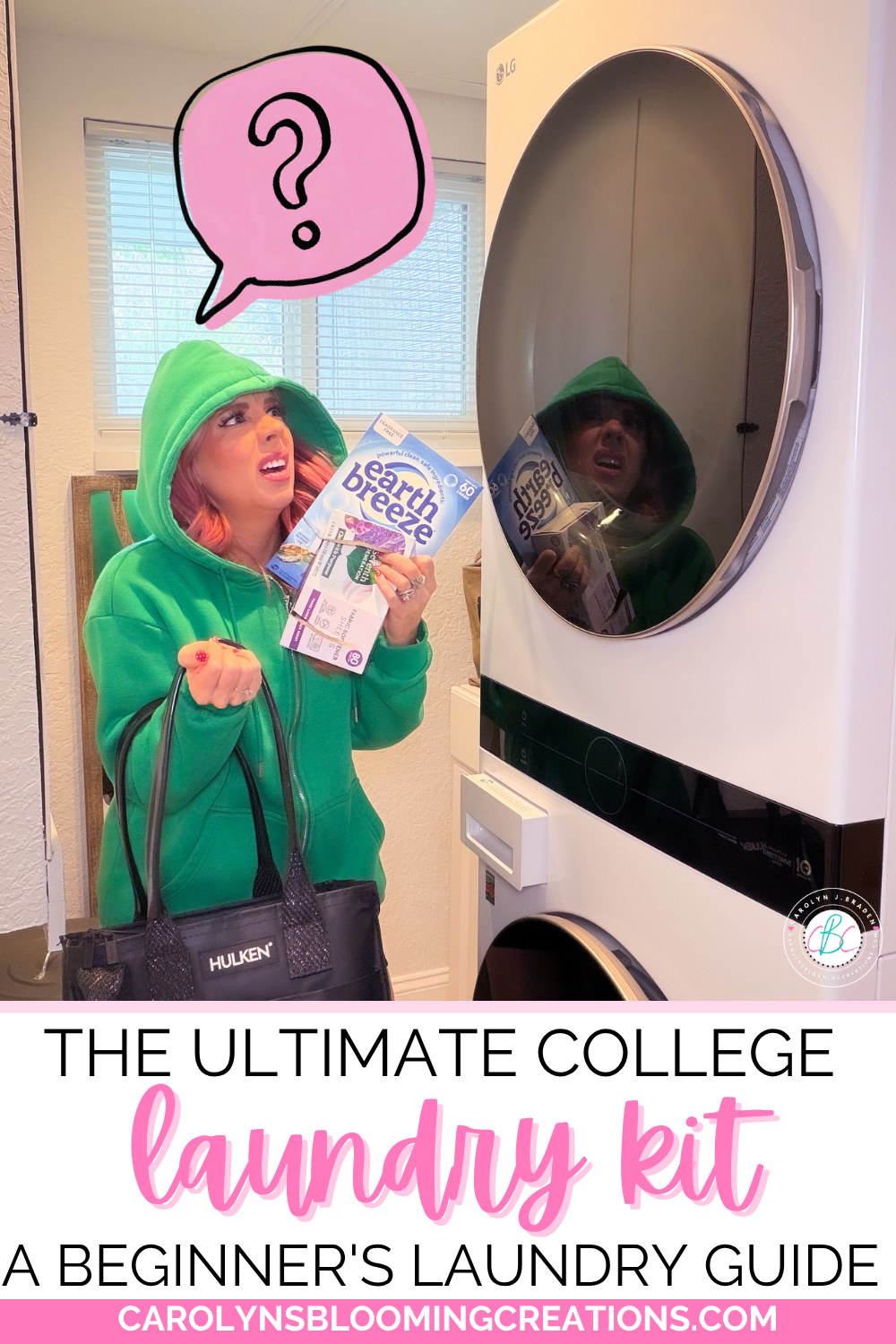
See my small laundry room organization with our laundry tower here or via my YouTube channel @carolynjbraden below:
Things to Strip
Now that I’ve done laundry stripping (AKA deep cleaning) and saw how effective and easy it is, I’d strip the following:
towels
baby clothes
burp cloths
workout clothing (especially those sweaty yoga pants, according to a stylist in my salon)
vintage items (we stripped an old Fendi shirt that had a yellowed collar and it definitely reduced the yellowness to almost non-existent!)
stained materials
dog beds
comforters/bedding
bath and pool towels
washcloths
any teenage kiddo’s socks/clothing
whatever else still smells or looks dingy after washing

Gathering the worst things I needed stripping
Adjustment Options to Consider
While many have laid out their process online and have used very specific amounts of soaps, you need to adjust to what works for what you are stripping in. I did mine in our huge bathtub, but you can do it in your laundry machine (put it into a “soak” setting), a sink, a giant container like a plastic storage bin or a bathtub.
You also may need to adjust amounts depending on the sensitivity of skin you have in your household. While I lay out a process which involves washing the laundry post soak due to my husband and I having somewhat sensitive skin, you can merely do a rinse cycle of plain water instead. You can also adjust what kind of powdered detergent you like best.
Check out my 1-minute video tutorial for this project on my TikTok now or below via my YouTube channel @carolynjbraden!
How Often Should I Strip Laundry?
Because this process is new to me, I’d estimate that you should strip your laundry maybe quarterly. You can do it less often depending on how often you use the fabrics you are stripping. I’d strip more often IF it’s workout clothes, dog beds or other items that get used daily or simply get a lot of use.
I even think this process is more effective than the laundry boosters I’ve tried which I wrote about here. I also think the soaking is the key. Everything, including our human bodies and hair, needs a good deep cleaning from time to time to remove dead skin, soap build up and more.

You can see the ick!
How I Stripped My Laundry for a Deeper Clean
Now for the process. Remember as I said earlier you can adjust amounts and detergent depending on the size of tub you are using and depending on skin sensitivity. Here’s what I used and how I did it:
¼ cup washing soda (get it on Amazon here or via Walmart and it can be used to boost all laundry detergents)
¼ cup Borax (get it on Amazon here or via Walmart and many grocery stores have it and you can use it to make your own laundry detergent like I’ve done before!)
½ cup to 1 cup powdered laundry detergent (I used Tide and you can also get it via Walmart)
Hard Water Option: ¼ cup Calgon (Amazon or via Walmart and you should add this if you have hard water in your area and strip often, I do not live in an area like this at this time so I did not add it)

I use gloves as I have sensitive skin
My Laundry Stripping Process:
Gather all the items you need to strip (I started with a few towels, a yellowed collared shirt, and our bedsheets)
Fill a tub, bin, or sink with hot water (enough for the laundry to float freely in)
Add in the washing soda, Borax, and powdered laundry detergent and stir around with gloved hands (I used gloves because again, my skin is somewhat sensitive).

Laundry Stripping Results: Before and After
Add in the laundry (mine was clean but it does not have to be as I tested both) and push into the water mixture.
Within three minutes, I saw the water already shift in color to a grayish tint.
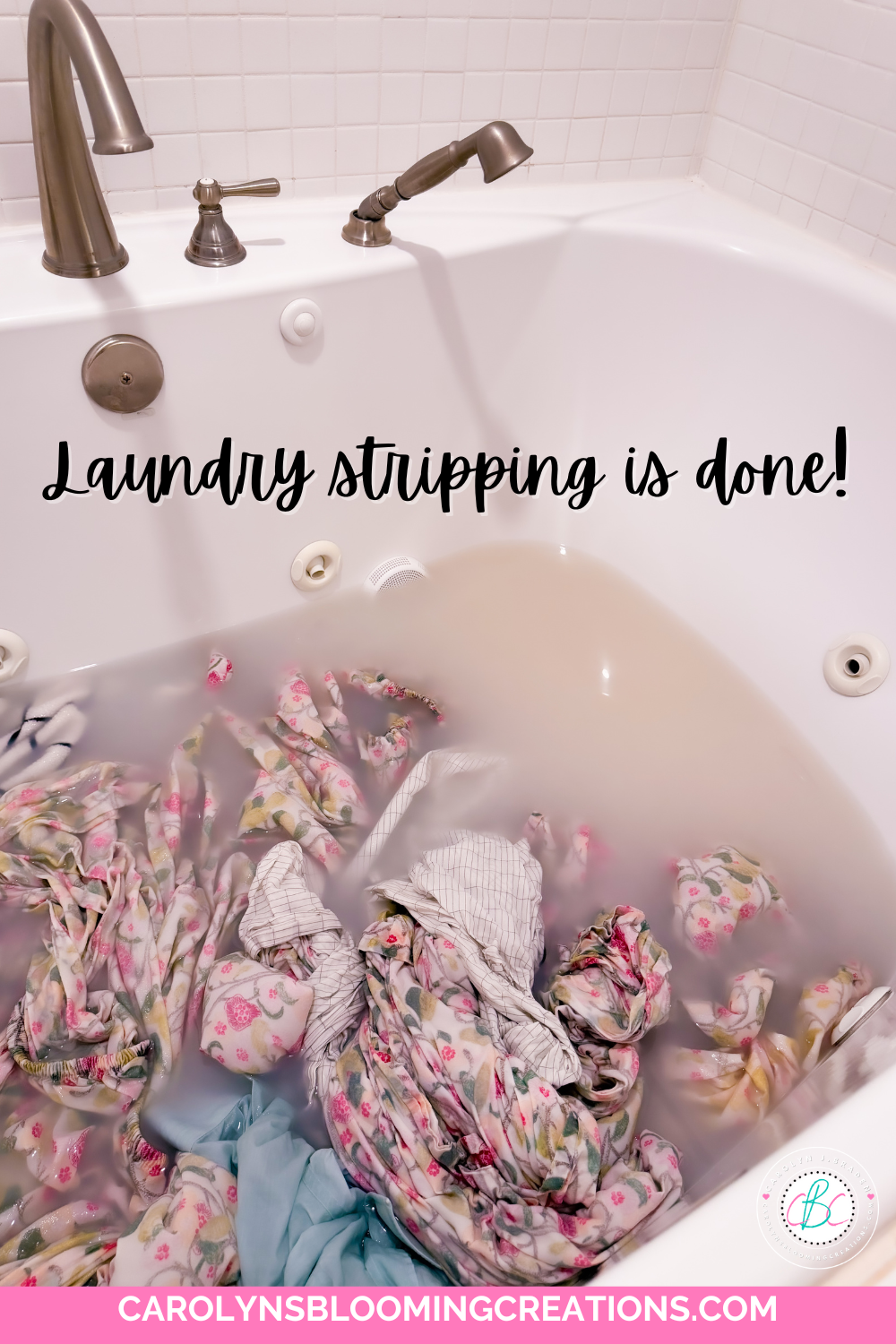
All ready for rinsing!
I let mine soak for 5-6 hours. The water turned to a browner color and then it was time to remove.
The removal was a bit of a process, but to make it easier than what I did (I removed the soaking laundry first so I could get a good photo of my water), you can drain the tub first, then wring out some of the water so the fabric isn’t super heavy. To get the laundry to my machines on the first floor from the second, I put it all in a plastic garbage bag as it was still very wet.

The brown water post stripping
I put my stripped laundry in my laundry tower, and did a full wash cycle sans (without) any detergent. You can simply run a rinse cycle, but I wanted it to be a full cycle to get it fully clean with no residue.

My results stand out!
Laundry Stripping Results
Lastly, I dried everything in our tower’s dryer and you could see and feel a difference, especially in my towels. They were whiter, fluffier and smelled great! Our sheets that night felt cleaner, and even after a few days, I still noticed them smelling better than usually after a few days. I wash my sheets weekly, and having a week-long of fresh smelling sheets is amazing!
Final Thoughts
I will do stripping again. Anytime I see pitt stains or yellowed collars or that dingy gray and mildew smell coming back to my clean towels and sheets, I’ll do a deep “stripping” clean. Buy new towels and sheets when they smell just isn’t economical and I like knowing there is a solution that is budget friendly and easy.

I’ll strip again, lol!
Take Action
I encourage you to try this laundry stripping with your own creative twists and share your creations on your social accounts! If you tag me using @carolynsbloomingcreations or @carolynjbraden, I’ll see it! Or tell me about it in the comments below.
If you loved this article, then we know you’ll love this one too: Best Gnat and Fruit Fly Traps That Actually Work Based on Our Tests
Carolyn J. Braden is the owner of Carolyn’s Blooming Creations is a regular contributor and editor for CBC. She has been featured in numerous media publications such as InStyle Magazine, on HGTV, on Bustle.com, and more. She is the author of the books Georgia McMasters in Amethyst Lake Cemetery, How To Be Yourself: 3 Ways To Help You Being You, and the illustrator for the children’s book Bridging Connections. She is a former classroom teacher that now dedicates her life to educating others on how to live their most healthy, creative and happy life. Learn more about her visiting our About Us page.